The Archeological Society of Maryland, in collaboration with the Maryland Fluted Point Survey, led by Dr. Zachary Singer, Maryland State Terrestrial Archaeologist, is organizing a large-scale protein residue analysis of Ice Age (circa 13,000–11,800 year old) stone tools from Maryland to identify the animal prey that people were hunting. This analysis, which will be conducted by Archaeological Investigations Northwest, Inc., will address a fundamental gap in knowledge of Maryland’s Ice Age inhabitants.
Due to poor preservation of animal bones, archaeologists in Maryland have not recovered direct evidence for the animals that people hunted in Maryland during the Ice Age. The protein residue investigation will provide the first direct evidence of animal hunting by Maryland’s Ice Age inhabitants. The investigation will also explore whether Ice Age peoples in Maryland hunted now extinct animals, like mastodons and Pleistocene horses and bison. Since this study involves both Early and Middle Paleoindian artifacts, the protein analysis may also provide evidence of changes over time in exploitation of different animal taxa.
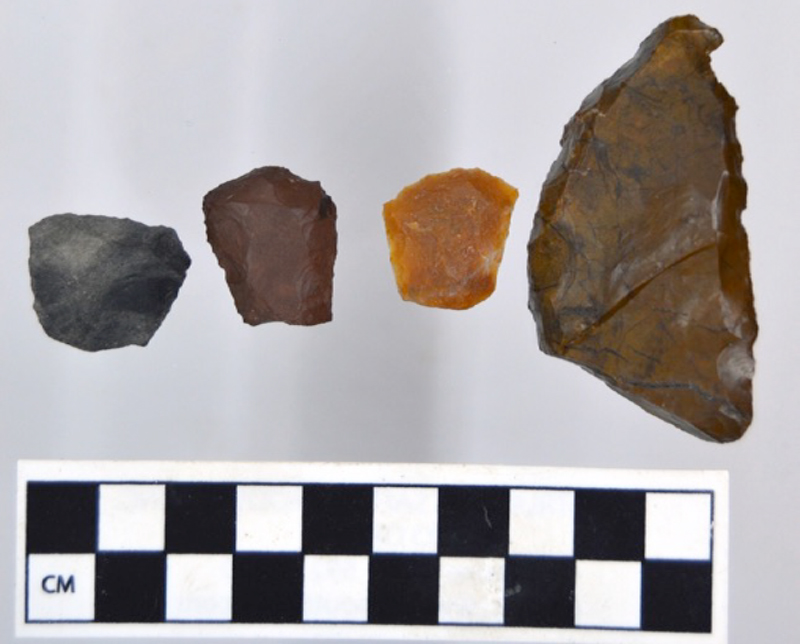
Unifacial scraping tools from Montgomery County, MD
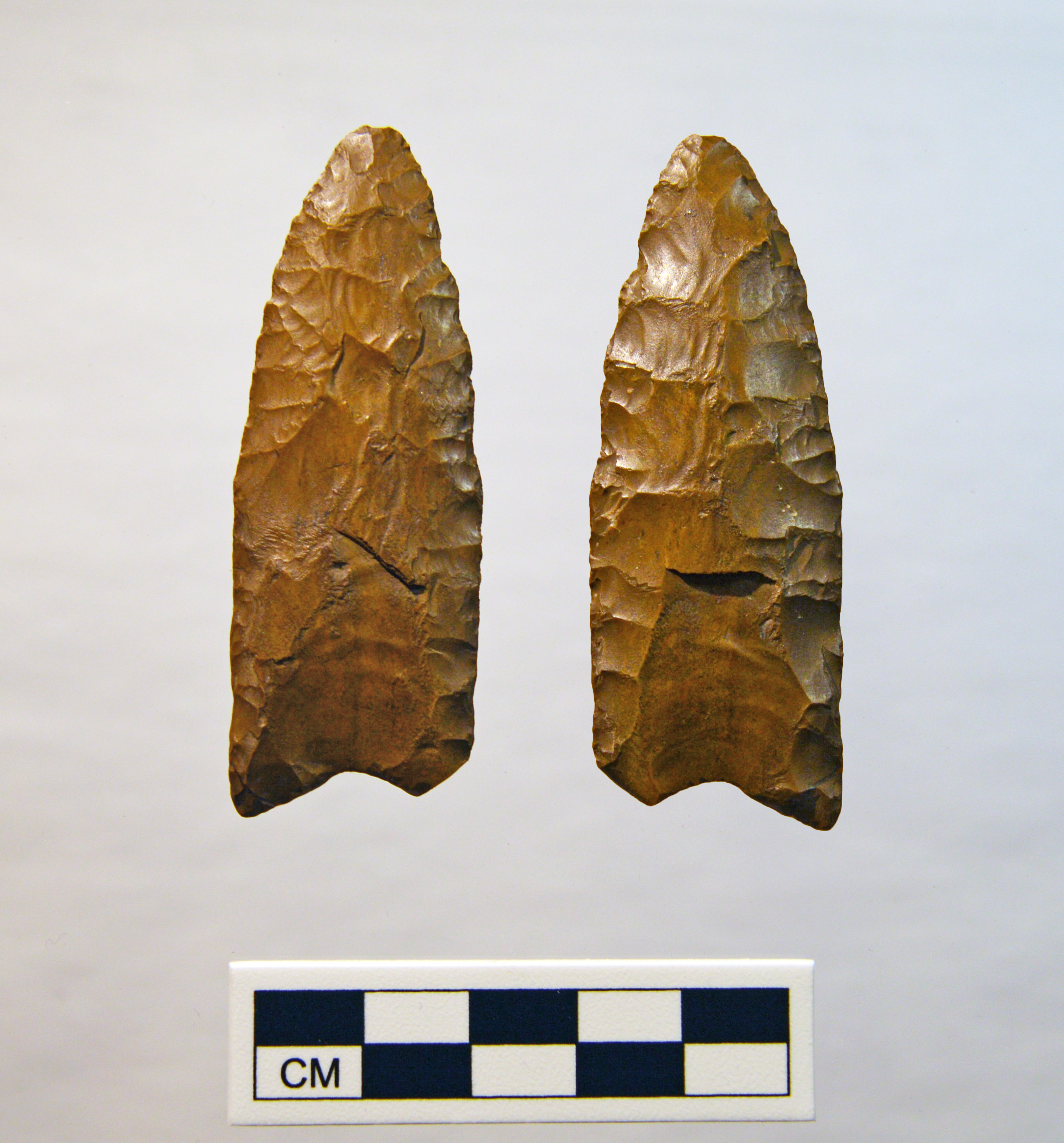
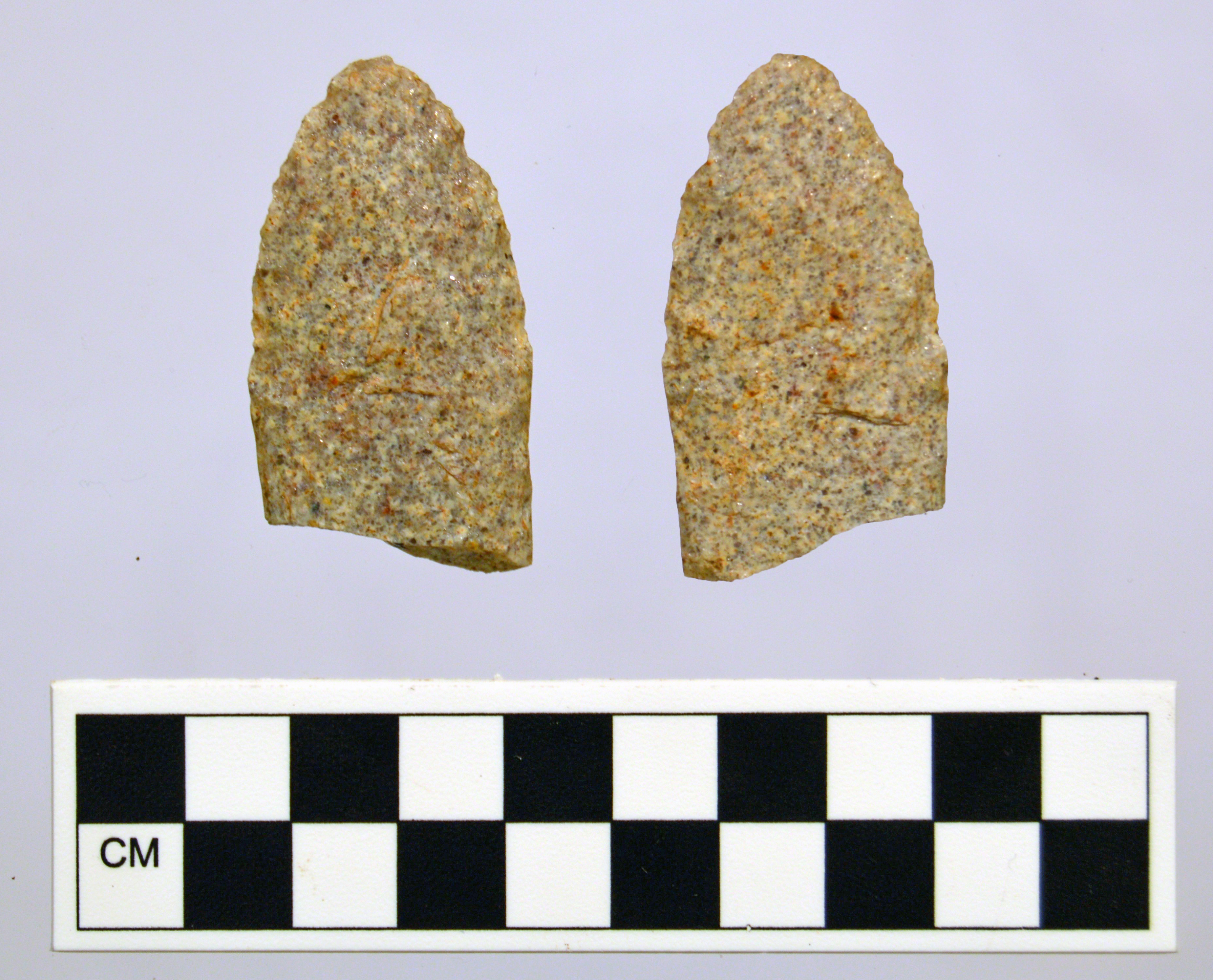
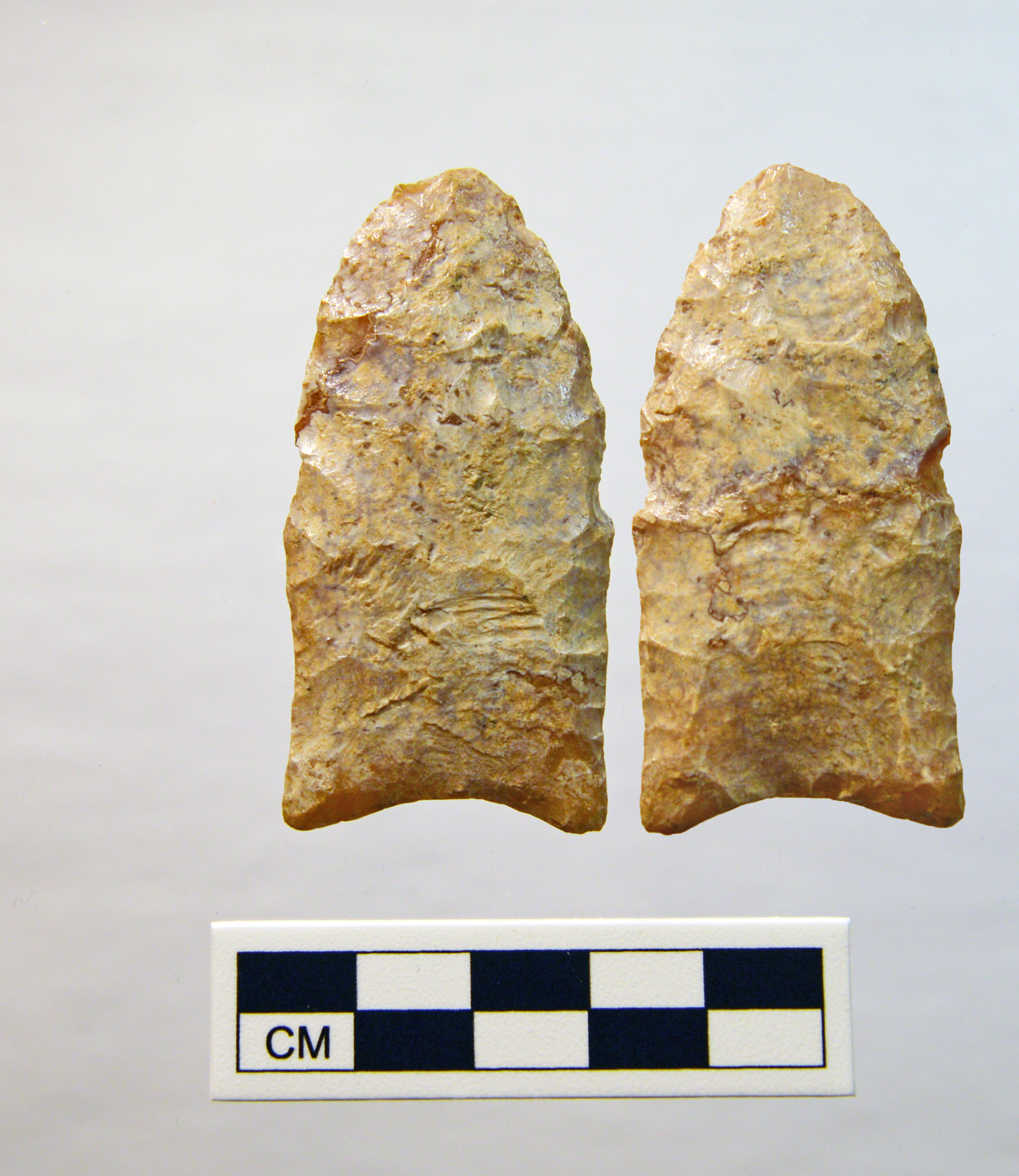
Crossover Immuno-Electrophoresis Analysis of Ice Age Stone Tools
Protein residue analysis of Ice Age stone tools will be conducted using crossover immuno-electrophoresis (CIEP) to identify evidence of animal blood residue. The CIEP technique tests solution extracts of protein residues preserved in micro-cracks on the stone tool surface against modern antisera from animal taxa. A positive immune reaction between a stone tool solution extract and a modern animal antiserum indicates the presence of proteins on a tool from hunting or butchering an animal. The positive reaction is usually attributable to a family-level taxon (e.g., Proboscidea, Bovidea), but not to a species level. The largest possible sample size is desired to increase the likelihood of positive results, since positive reactions only occur on a minority of the tools tested. Nature published a technical article, Paleoamerican exploitation of extinct megafauna revealed through immunological blood residue and microwear analysis, North and South Carolina, USA, that provides details on how this process works.
The current analysis by Archaeological Investigations Northwest, Inc. is testing 75 Maryland stone tools (Table 1) against antisera for elephant, bison, horse, and deer. These four antisera were selected because 1) the positive reactions for the extinct mammals on Paleoindian stone tools would provide the first direct evidence of exploitation of now extinct megafauna in Maryland and 2) deer seems to be the most likely extant mammal to have been regularly hunted by Paleoindians.
| Artifact Type | Count |
|---|---|
| Fluted Point | 43 |
| Biface | 2 |
| Endscraper | 14 |
| Sidescraper | 8 |
| Utilized/Retouched Flake | 6 |
| Piece Esquillee | 2 |
| Total | 75 |
Ice Age Diets Project Fundraising
Donations are now being sought to support testing the frozen voucher samples against additional antisera.
Increasing the number of tested antisera may increase the potential for positive reactions on the 75 stone tools included in the current study. Due to funding limitations, the present study capped the number of antisera at four (elephant, horse, bovine, and deer). Additional funds will be used to test the frozen voucher samples produced by this study against additional antisera potentially including camel, peccary, bear, cat, dog, rabbit, beaver, and trout.
Testing the 75 frozen voucher samples against one additional antiserum can be accomplished for approximately $3,000. This project page seeks to raise $12,000 to test the 75 frozen voucher samples against four additional antisera. If funding does not reach $3000 then only select voucher samples will be tested against additional antisera. If funding surpasses $12,000, the vouchers will be tested against even more antisera.
You can also donate to ASM's Analysis Fund. This fund is used to help pay for laboratory analysis efforts on a wide range of projects undertaken by Maryland's Archeological Community. Donation to either fund can be made using the buttons below.
Ice Age Diets
Project Donations

Current Donations
$13,150
ASM's Artifact
Analysis Fund
ASM's General Artifact
Analysis Fund
Donations to the Archeological Society of Maryland, Inc.
ASM Inc. is a recongnized 503(c)(3) non-profit organization chartered to provide the community with education about archological sciences and activities in the Maryland area. Donations are used to further actitivies of the society, to include funding public excavations, providing speakers at venues aross the state and supplementing laboratory procedures suchs a radiocarbon dating, floral and faunal analysis, and geophysical site analysis on various projects prsented to the ASM Board of Trustees.